Author: Dr. Joy

Telling Elephant Tales

Elephants, in all their majesty, do two things that make them remarkable beyond their size and status in folklore and nature…

They protect their young by circling up.

They remember their old and honor that history.

I listened to an outstanding lecture and interview by Nikole Hannah-Jones that is sitting with me like a good cup of tea…I keep feeling the warmth of the words spoken and know I have to finish that book.

I know there is something liberating in subversive education that we must return to and embrace.

I know there is something healing in subversive education that will help us recover from harms done, like surgery for broken bones entire systems (big and small) can be fixed.

She admonished the audience–all of us–to DEFEND INSTITUTIONS as we pursue justice citing Timothy Snyders second proposition he calls lessons “On Tyranny“.

I choose education…subversive education. The veiled education that protects our young but requires others to do it. Our life depends on it…

An Ubuntu Thing

Overcoming poverty is not a gesture of charity. It is an act of justice. It is the protection of a fundamental human right of every person to be able to live with dignity. – Nelson Mandela 

Serving the people with charity is complicated…especially in a system driven by the triple threat braid made by strongholds of capitalism, militarism and racism. These are instruments of oppression that bind us in more ways than can ever be expressed in a few words. Yet, we will try.

The federal decision to cut SNAP benefits to the masses is reprehensible, especially in a social climate where inflation is on the rise, grocery prices are out-of-reach for many and job security is fleeting. According to a January 2025 Center on Budget and Policy Priorities report,  more than 64% of the people who benefit from SNAP in New Jersey are in families with children. What is the real cost per person for these benefits? For less than $7 per person per day, the federal standard expectation, families are expected to feed families. Even with an imagination, that is challenging. Thankfully, we have school breakfast and lunch, right? Wait! Not so fast. What happens when schools are not in session? What happens when there is a culture of waste and social pressure to eat fast food or fancy-packaged meals? 

How do we get back to self-determination and social progress that can be dated back to the days when organizations like the NAACP, Urban League, UNIA-ACL, Divine 9 and many other organizations in and around urban centers embraced community gardens, holistic education and service within our community? We need to leverage the spaces we occupy to teach and reach. We need to tap into our past practices to grow what we need to survive: grow food, grow partnerships, grow our children to respect and value simplicity while creating pathways for all of us to be more than consumers.

Until we get that right, we need SNAP. It is a good thing that some states are picking up the tab on benefits (for this month at least). Be warned however…too much of that, will usher in a new shift in responsibility for the people to the state. It is 2025. Have you seen that tracker about that project? It is no coincidence that we are here in the final days of this monumental year. Chaotic? Yes. Planned? Perhaps. We must resolve to name the myriad of ways that poverty is being sustained by the federal government—both parties. This is a political problem about spending and how we see people as human resources, not a partisan issue. Just like any other complicated challenge we face as a people, we must look to who we are as people—not as Americans or citizens—for a solution. It is an ubuntu thing: I am because WE are.

When a certificate leads to freedom

I love public media…especially public radio. On my way home today, I listened to a new-to-me writer and critic from Baltimore named Lawrence Burney. He spoke about Gil Scott Heron and Frederick Douglass and his words arrested me…

He talked about knowing, even as a kid, when “gravity is pulled from a person”. Gil Scott Heron could do that. He described how Frederick Douglass escaped chattel slavery by embracing his functional knowledge as a person who knows about coastal community…he posed as a seamen and carried a free seaman’s certificate. Knowledge of the language and practices of the Jacks was part of what he needed. Paper in hand, is the other. His story of Escape from Slavery and its connections to the reality that there is ‘no sense in wishing’ is just powerful!

Rainbows on Cloudy Days: Graduation’s Promise

Today is a special day. Today is an ode to the Proverbs 4:7 woman that you are.

WISDOM IS THE PRINCIPAL THING: “Wisdom is the principal thing; therefore get wisdom: and with all thy getting get understanding” Proverbs 4:7 KJV.

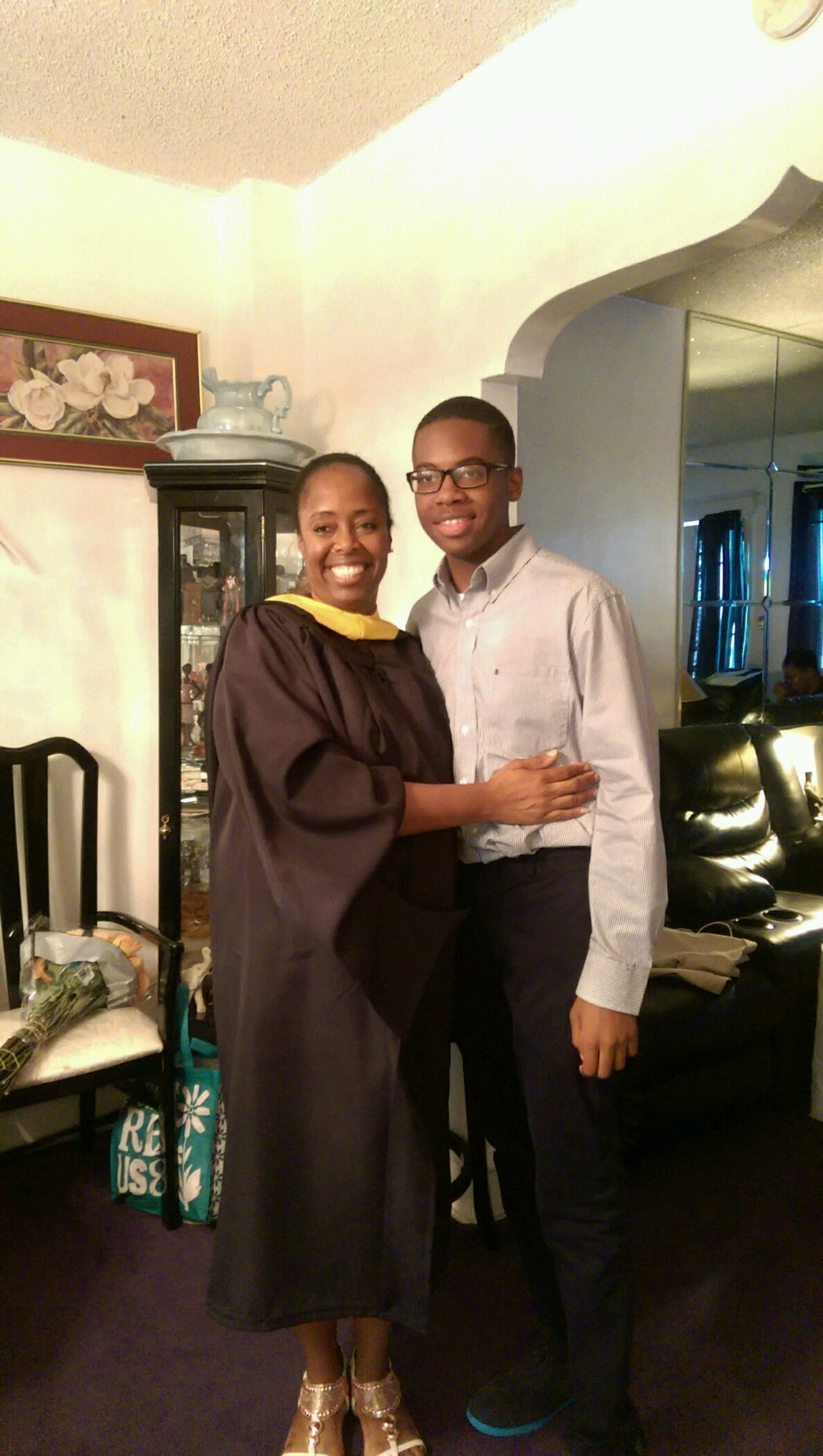
There is no doubt in my mind that without my sister and God’s grace and mercy, today would not have been possible.

There is something about arrivals to special moments that have always been stormy…the things that characterize your our “I’m here” announcements…uncertain and insecure, safety could only come in communion, cooperation and the creative forces possible through our twinness.

Did you know that on our birthdate, the national tree was making its way to Washington, DC on a train that derailed twice?!

I remember HS graduation (vaguely) and I think it had been raining for days beforehand, threatening the number of tickets we would get. Luckily, we had a pair so…we managed to cross the bridge smiling together anyway. The people who were cheering us on, knew that we would be ok, because we had each other.

Graduation means a lot in our family. The movement from one place to another. From one challenge to another. From one hard reality to another. Nothing has ever really been easy but it has always been characterized by our faith…in God and each other. When no one else believes we can, we do. We believe in each other and support each other to get whatever done.

On your first college graduation day, it rained so hard. It was cold. But as the story goes, Granny sat there with her umbrella until your name was called. You had arrived to a place that many would not.

On the many graduations since, through sunshine, ridiculous heat and storm clouds adrift…you persisted!

I can taste the rainbow in this moment…in a wonderful Skittles kind of way. They give me blisters but are sour and sweet and remind me of childhood joys.

I am so proud of you…

I love you for life.

Congratulations.

Teach.

Dr. JJ!

Being Better: A Reflection

“You are not sorry.”

Without explanation, I responded to the overused reply.

Tween energy, rolled eyes, sucked teeth and huffing…

Then, I calmed myself and continued…

I don’t want you to be sorry, I want you to be better…

I cleaned my office today and found this speech I gave in October 2019 to a group of incarcerated youth:

Being Better

In his book Better, Atul Gawande opens with a description of his life in medical school–observing others while trying to make his own way. He describes an experience when a more senior physician asked him, a younger doctor, to check on a patient who at first seemed asymptomatic: no obvious stress or trauma to be addressed in that moment. Like most young people will do, he half-heartedly heard the elder and only minimally planned to fulfill the request…in other words, he didn’t really check on the patient BUT the elder knew that he might not. The elder doctor, did not trust him and like elders will often do, he checked on the patient himself, several times. As the patient’s condition changed, the elder was prepared and available to respond. Long story short, it is because the elder physician checked on her that the patient survived. 

Gawande goes on to write about three ways he believes we can become better:

  • through diligence,
  • by committing to do right, and
  • by thinking anew.

With these three thoughts in mind plus a little something more, I hope to spend just a few moments reflecting on this–that which he calls performance success.

Diligence by definition means to do work with persistence and effort. In spite of challenges, the person who is called ‘diligent’, is unafraid to do work. As noble as that sounds, diligence is not without its problems. Work done only for the benefit of one is not really work at all, that is called survival. Can we do better? I say yes.

The second challenge to do right is an idea that builds on the first. Doing right, like work, can be hard because for some, the “right” way is not always a clear or simple path. Doing right requires knowledge of systems where rules have been established, norms set in place and expectations made clear. Sadly, these systems, norms and expectations are not always visible to many of us whose life stories are lived in dark space. Imagine trying to go a right way when there is little light to see a road. How do you do it? You connect with those who have done it before and who have returned to deliver new perspective perhaps. Perhaps you do it by asking for help from those positioned along the way. One thing is clear: doing right requires even more work than simply being diligent. It requires a level of humility that connects humans to other humans. Doing right is about bridging heart-mind gaps and reducing ego so that your mission changes from getting somewhere fast to getting somewhere safe.

The last challenge–thinking anew–is even more difficult to imagine, if you haven’t accepted the first two. Thinking anew requires an almost obsessive reflection on failure and constant searching for new answers, new solutions, new pathways. Thinking anew embraces the reality that failure is always an option and thus will often present new opportunities to re-imagine, re-present and re-vise your story. Thinking anew is an almost instinctive phenomena; the brain power and cognitive load needed to change your thinking or your mindset requires creativity that is visceral and taps into moments of stored strength. This creativity and stored strength define who we are not as people but as beings walking around the planet, giving and taking as we do our daily tasks.

It is undeniable that BEING BETTER is a superior experience to BECOMING BETTER and far superior to BEING SORRY. Being better is about understanding that how we are is intertwined with who we are–in context–of time and space and place and others. Our experiences–the ones that have brought us joy, laughter, and pride can be leveled against the ones that have brought us regret, shame and sorrow. Each has shaped both our becoming AND our being. When the more negative forces overtake the positive, the flip side is often guilt without remorse. The weight and heaviness of our mistakes keep our heart and mind off balance. We hide in these moments and fail to BE that which we were all intended to become as humans: better. 

Being better is an act of constant reflection. It requires a steady quest for information and pursuit of truths–patterns that explain how things work. Being better is both an individual and collective goal. There is no external competition embedded on the journey to being better; you are/we are our own competition. What a gift it is to simply work toward being better instead of best! I challenge you/us to be better, to perform well, to define success according to a standard that is absolutely useful to us where intentional joy in the face of challenging circumstances IS the expected outcome. 

With this, I go back to Atul Gawande as a guide, from his thoughts on diligence as I close: be careful to wash your hands. When I look at my hand, I see strength and ability. I see a place to hold other hands, smaller hands, more fragile hands as a leader based on my own strengths.  I see power to resist self-doubt as I clinch to the causes of others that are far greater than my individual need. Whether I am holding a mop or a pencil, writing, typing, texting or waving, I use my hands to reflect daily on the things I must process every day–these are my points of departure and pathways to joy. I encourage you today and always to keep dis-ease away from the places where YOU will abide. Wash your hands often and find peace in the process. 

Who knew that in just a few weeks the world would be turned upside down?

I wonder where those young people are now…

I hope they are doing better.
Re-Membering US

I asked a group of children, Bb children, why Black History Month is celebrated during the month of February. None of them knew…then I realized, many do not know why. Our history and culture has been caricatured so much that the memes and messages about our heroes and contributions to societal strength are unknown.

I draw from a well that runs deep

Deep like the rivers

Of Mississippi, Hudson, Passaic, Raritan and Delaware

Emptied from the Senegal, the Congo or maybe the Nile

Whose soils and softened shores I have never known...

Uncertain and yet I care

To know and wonder.

I wrote an essay on February 2nd 2020 called Why We Need BHM in Times of BLM, unsuspectingly, days before the world shut down. I wrote it as a model for students to demonstrate how to tie “old texts” into new contexts and document important perspectives. Reflecting on it now, I still love it but I realize it is not enough. 

This entry is a love letter to them…a reminder to the children of BB, Bb, and bb genotypic character who find themselves in an America that would be oddly familiar to our ancestors that we have a history and a heritage of excellence in the United States. To the Black and Brown children, adult and young, we have heroes, super and elegantly normal, who deserve to be celebrated and re-membered in our times and forever.

Look at what AI will do with a style guide and prompt…do you see us? In this moment, is this us?

Here are some of our heroes…now ancestors whose love for us shines brightly…

Frederick Douglass

Sojourner Truth

Ida B. Wells

Anna Julia Cooper

Charles Henry Turner

Percy Julian

George Washington Carver

James Weldon Johnson

Booker T. Washington

Madam C.J. Walker

W.E.B. DuBois

Pauli Murray

Thurghood Marshall

Walter White

Katherine Dunham

Josephine Baker

Barbara Jordan

Gwendolyn Brooks

Toni Morrison

Ralph Bunche

Bayard Rustin

Mary McLeod Bethune

Henrietta Lacks

John H. Johnson

Robert S. Abbott

Nikki Giovanni

Ella Baker

Septima Clark

Fannie Lou Hamer

Carter G. Woodson

This is who we are…in every shade of brown, our Black is beautiful. In every body, male, female and non-gendered, we are human and dignified. We are re-membered like pieces of a puzzle being put together…what you see is only part of the full tale.

These are just a few of my heroes, restoring their legacies in my memory and right-now consciousness. There are many people who have made US better; lifting every voice in this moment, I hear and see our past and celebrate how it made US, how it made me. Their stories help guide US in this moment because we have been here before. Their DNA is ours. Their stories are our own. We are not our ancestors, we are surely not better than them…we are them.

Imani Day

I have faith in us…the ones who believe in our greatness…

The ones who work on behalf of community…

The ones who live and love on behalf of children…

Faith and intention are like two interlocking hands

A muscle memory made stronger by a dark past giving birth to an expectant future.

It is a new year and I am grateful for lessons learned this past one,

Having courage to release things that are not for me

Approaching new opportunities with humility and grace…steady…joyfully.

Happy New Year.

Dear Nikki

Rest in Power Soror Nikki Giovanni (1943 – 2024)

I met you as a girl

Ego Tripping

In my youth…

I learned to admire your wisdom

As you knew to respect your elders, even when you wanted to challenge them.

Then I met you in person.

As a girl woman among my elders

As a sister

Soror Nikki

Your wisdom I admire

Because I learned so much from

You

Your words

Your life.

Rest in Power Queen.

Gemstones of Multicultural Education: Celebrating Milestones in Education Theory

Like this AI-generated geode, the layers of necessary discussion that we need to have in 2024 are both tragic and brilliant. Tragic because our abuse of the natural world is so profound that gems like this are rarely discovered anymore. Brilliant because at some point in human history, we have imagined this beauty…in all of its glory and intention…we can see it. The slow process that creates magnificently large crystals and the fast-pace of change that reveals the stones after a storm.

Image available online at https://www.freepik.com/premium-ai-image/closeup-shot-blue-gold-crystal-sapphire-geode-gemstone-with-selective-focus-depth-field_334373811.htm

This piece is a celebration of multicultural education’s past, present and future in the discourse about reform. In 1974, James A. Banks published an editorial in the ASCD journal that admonished educators to uphold a type of cultural pluralism that celebrates diversity as a strength and ideal product of democracy. Fifty years later and only days after a national election that has many people wondering ‘what’s next?’ our commitment as citizens must be to education…learning that empowers us to be better humans. In his editorial, he wrote:

…the school has a responsibility to teach a commitment to and respect for the core values such as justice, equality and human dignity expressed in [American] historical documents…

Written 50 years ago, these words have reached GOLDEN ANNIVERSARY status. In search of definitions and goals for multicultural education, James Banks’ works have formed an important foundation for generations of educators since.

Written 30 years ago, as a foreword to a brilliantly written book, Scholar John Henrik Clarke, gave us pearl statements about solidarity when he wrote:

What is the relationship between the dominant modes of European thought and the dominant modes of their behavior towards others? If the people in Africa and Asia and the former European colonies are to emerge into full independence, statehood and world responsibility, they will have to answer the above question creatively and in their favor. Then, in a collective sense, they will have to participate with others in a world that can be free, that can recognize European influence without accepting European dominance (p. xvii)

Thirty years is the PEARL ANNIVERSARY. We are Black pearls, unique and special, fabricated and precious.

Written 25 years ago, Geneva Gay first published her treatise on culturally responsive teaching. A guide for the field on theory, research and practice, the seminal work has served as a guide for so many…like flecks of silver embedded in native rock, the material left untouched is taken for granted. Chipping away at the outside though, you can see its simple brilliance, especially if you listen as it is excavated from the noise of rigid structure that only yields in disaster.

Twenty-five years is the SILVER ANNIVERSARY; a hard-fought victory of longevity for those who can achieve it.

How do we, in education, celebrate small milestones: one year or five? Education Week knows how…the PAPER ANNIVERSARY and the SAPPHIRE ANNIVERSARY are great opportunities to be reflective on where we have been and what we have done as teachers. Cultivating Genius (2020) and Unearthing Joy (2023) are right there! Gholdy Muhammad’s works are joining this beautiful mine of gems about multicultural education. Providing frameworks for equity, she challenges us to form cultivating genius and joy collectives…we can do it.

Happy Anniversary.

If you can write, you need a pencil

Early September has meant the conclusion of summer book club readings for at least the last 40 years for me…no longer are stamps, stickers and coupons for ice cream my reward. The gift of summer reading as an adult is the seeds for reflection that linger long past the turned pages, clicked on buttons, and quietly returned audiobooks.

This summer is no different. I am finally reading JAMES (by Percival Everett). The title for this post is a line from Young George spoken to the fugitive, whose sage words and deeds have inspired me to write here, for only the second or third time this year.

A few other lines in the book have pulled me back to this blog that I can’t stop thinking about

  • What do you mean, Young George? Tell my story? How do you suggest I tell my story? He looked at his feet, I did too. They were bare, his toes grabbing the wet grass. He looked at my face. ‘Use your ears,’ he said…’Tell the story with your ears. Listen.” (pp. 91 – 92)
  • With my pencil, I wrote myself into being. I wrote myself to here. (p. 93)
  • Young George found my face in the thicket. I had the pencil. It was in my pocket. He was struck again and I winced…He found my eyes and mouthed the word RUN. I did. (pp. 95 – 96)
  • …if someone pays you enough, its okay to abandon what you have claimed to understand as moral and right…(pp. 101-102)

As an educator, I recognize the complexity of this moment. Five school years of COVID education. We are still quaran-teaching. Because I am also grappling with health and wellness decisions, I can’t help but think in situational medical drama as a footprint for this journey…

I keep thinking about children in 4th through 7th grade, where were they during these years? How has our uncertainty and flawed thinking impacted them? I keep thinking about it: the children were the most vulnerable (and always have been)!

Seventh graders, were in 2nd grade–right at that educational place where wins in reading are typical and celebrated. Libraries were closed. Churches were closed. When did they LEARN to READ? I try to forget about all the other subjects…but I can’t. How were mysteries and adventures unlocked for them?

Sixth graders, were in 1st grade–finally trained for routines involving others outside of their family. Finally ready to sit at the “big kid” table with friends and having enough dexterity to clean up after making messes. They were at home. Comfortable and cared for (hopefully)…messes overlooked with doting others who expected, tolerated and lovingly corrected all their messes.

Fifth graders, were in kindergarten–independent from wearing diapers of any kind. They were encouraged to go to the bathroom whenever they needed to go, no permission needed, celebrations when successful. Zoom breaks and shortened school days with home visits and neighborhood clap-ins from friendly teachers and community members.

Fourth graders, were pre-school aged–the perfect opportunity for learning shapes and colors, the alphabet and singing songs, playing at the water table, sandbox or on the playground. How much happiness did they experience or see up close?

We told them to be ‘socially distant’ when what we needed them to be was ‘physically aware’. Why are we confused that they are anti-social and emotionally distant? We told them to wear masks and expect them not to be secretive. What sense does any of it make?

I am an educator and researcher who has been working on a book for five years…watching storylines in my own manuscript being published by others that I love and respect. I know it is time to pick up my pencil again…