Like this AI-generated geode, the layers of necessary discussion that we need to have in 2024 are both tragic and brilliant. Tragic because our abuse of the natural world is so profound that gems like this are rarely discovered anymore. Brilliant because at some point in human history, we have imagined this beauty…in all of its glory and intention…we can see it. The slow process that creates magnificently large crystals and the fast-pace of change that reveals the stones after a storm.
This piece is a celebration of multicultural education’s past, present and future in the discourse about reform. In 1974, James A. Banks published an editorial in the ASCD journal that admonished educators to uphold a type of cultural pluralism that celebrates diversity as a strength and ideal product of democracy. Fifty years later and only days after a national election that has many people wondering ‘what’s next?’ our commitment as citizens must be to education…learning that empowers us to be better humans. In his editorial, he wrote:
…the school has a responsibility to teach a commitment to and respect for the core values such as justice, equality and human dignity expressed in [American] historical documents…
Written 30 years ago, as a foreword to a brilliantly written book, Scholar John Henrik Clarke, gave us pearl statements about solidarity when he wrote:
What is the relationship between the dominant modes of European thought and the dominant modes of their behavior towards others? If the people in Africa and Asia and the former European colonies are to emerge into full independence, statehood and world responsibility, they will have to answer the above question creatively and in their favor. Then, in a collective sense, they will have to participate with others in a world that can be free, that can recognize European influence without accepting European dominance (p. xvii)
Thirty years is the PEARL ANNIVERSARY. We are Black pearls, unique and special, fabricated and precious.
Written 25 years ago, Geneva Gay first published her treatise on culturally responsive teaching. A guide for the field on theory, research and practice, the seminal work has served as a guide for so many…like flecks of silver embedded in native rock, the material left untouched is taken for granted. Chipping away at the outside though, you can see its simple brilliance, especially if you listen as it is excavated from the noise of rigid structure that only yields in disaster.
Twenty-five years is the SILVER ANNIVERSARY; a hard-fought victory of longevity for those who can achieve it.
How do we, in education, celebrate small milestones: one year or five? Education Week knows how…the PAPER ANNIVERSARY and the SAPPHIRE ANNIVERSARY are great opportunities to be reflective on where we have been and what we have done as teachers. Cultivating Genius (2020) and Unearthing Joy (2023) are right there! Gholdy Muhammad’s works are joining this beautiful mine of gems about multicultural education. Providing frameworks for equity, she challenges us to form cultivating genius and joy collectives…we can do it.
Early September has meant the conclusion of summer book club readings for at least the last 40 years for me…no longer are stamps, stickers and coupons for ice cream my reward. The gift of summer reading as an adult is the seeds for reflection that linger long past the turned pages, clicked on buttons, and quietly returned audiobooks.
This summer is no different. I am finally readingJAMES (by Percival Everett). The title for this post is a line from Young George spoken to the fugitive, whose sage words and deeds have inspired me to write here, for only the second or third time this year.
A few other lines in the book have pulled me back to this blog that I can’t stop thinking about
What do you mean, Young George? Tell my story? How do you suggest I tell my story? He looked at his feet, I did too. They were bare, his toes grabbing the wet grass. He looked at my face. ‘Use your ears,’ he said…’Tell the story with your ears. Listen.” (pp. 91 – 92)
With my pencil, I wrote myself into being. I wrote myself to here. (p. 93)
Young George found my face in the thicket. I had the pencil. It was in my pocket. He was struck again and I winced…He found my eyes and mouthed the word RUN. I did. (pp. 95 – 96)
…if someone pays you enough, its okay to abandon what you have claimed to understand as moral and right…(pp. 101-102)
As an educator, I recognize the complexity of this moment. Five school years of COVID education. We are still quaran-teaching. Because I am also grappling with health and wellness decisions, I can’t help but think in situational medical drama as a footprint for this journey…
2019 – 2020: School disruption six months into the school year (Emergency room)
2020 – 2021: Virtual whatever it was called–there were too many labels assigned to the task to give it any one description (Urgent care triage)
2021 – 2022: Return to “normal” (Doctor’s visit after the risk/threat of imminent danger)
2023 – 2024: New normal (Post-ops follow-up & rehab)
2024 – 2025: Second round of review (alternative therapies and novel treatments)
I keep thinking about children in 4th through 7th grade, where were they during these years? How has our uncertainty and flawed thinking impacted them? I keep thinking about it: the children were the most vulnerable (and always have been)!
Seventh graders, were in 2nd grade–right at that educational place where wins in reading are typical and celebrated. Libraries were closed. Churches were closed. When did they LEARN to READ? I try to forget about all the other subjects…but I can’t. How were mysteries and adventures unlocked for them?
Sixth graders, were in 1st grade–finally trained for routines involving others outside of their family. Finally ready to sit at the “big kid” table with friends and having enough dexterity to clean up after making messes. They were at home. Comfortable and cared for (hopefully)…messes overlooked with doting others who expected, tolerated and lovingly corrected all their messes.
Fifth graders, were in kindergarten–independent from wearing diapers of any kind. They were encouraged to go to the bathroom whenever they needed to go, no permission needed, celebrations when successful. Zoom breaks and shortened school days with home visits and neighborhood clap-ins from friendly teachers and community members.
Fourth graders, were pre-school aged–the perfect opportunity for learning shapes and colors, the alphabet and singing songs, playing at the water table, sandbox or on the playground. How much happiness did they experience or see up close?
We told them to be ‘socially distant’ when what we needed them to be was ‘physically aware’. Why are we confused that they are anti-social and emotionally distant? We told them to wear masks and expect them not to be secretive. What sense does any of it make?
I am an educator and researcher who has been working on a book for five years…watching storylines in my own manuscript being published by others that I love and respect. I know it is time to pick up my pencil again…
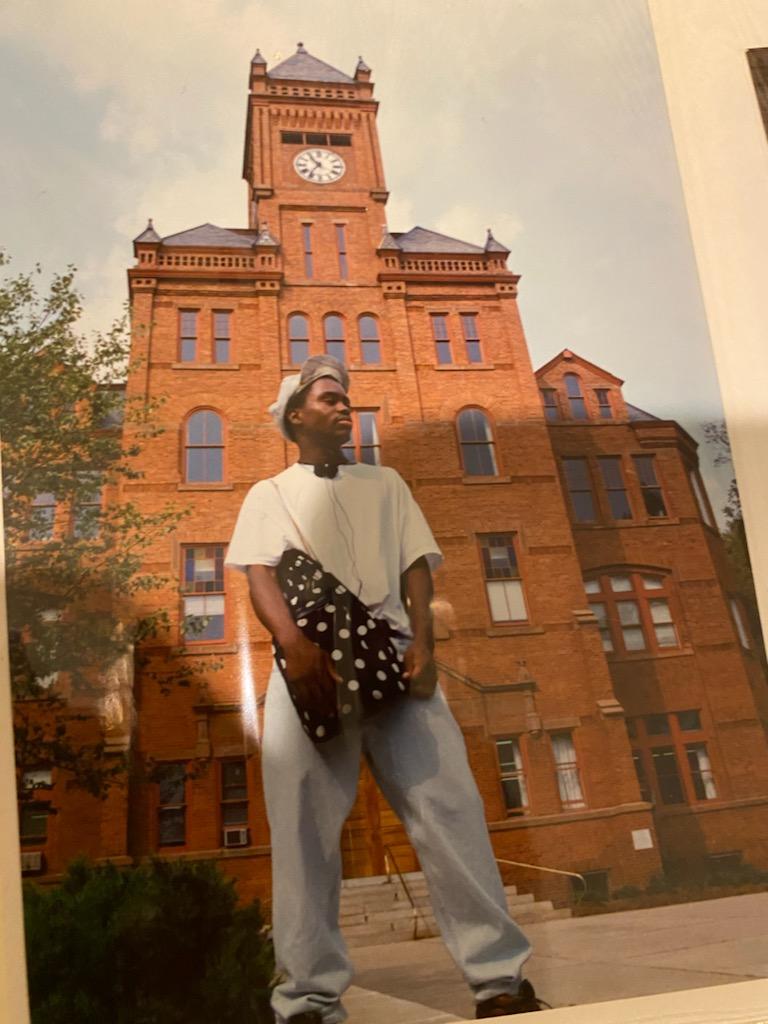
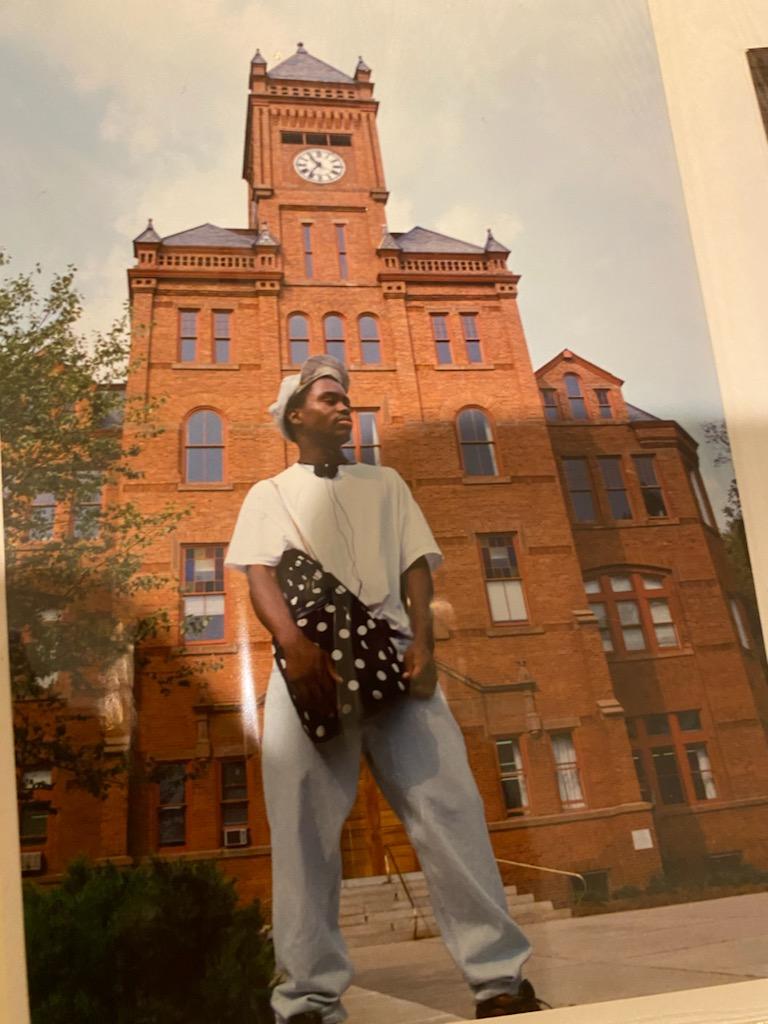
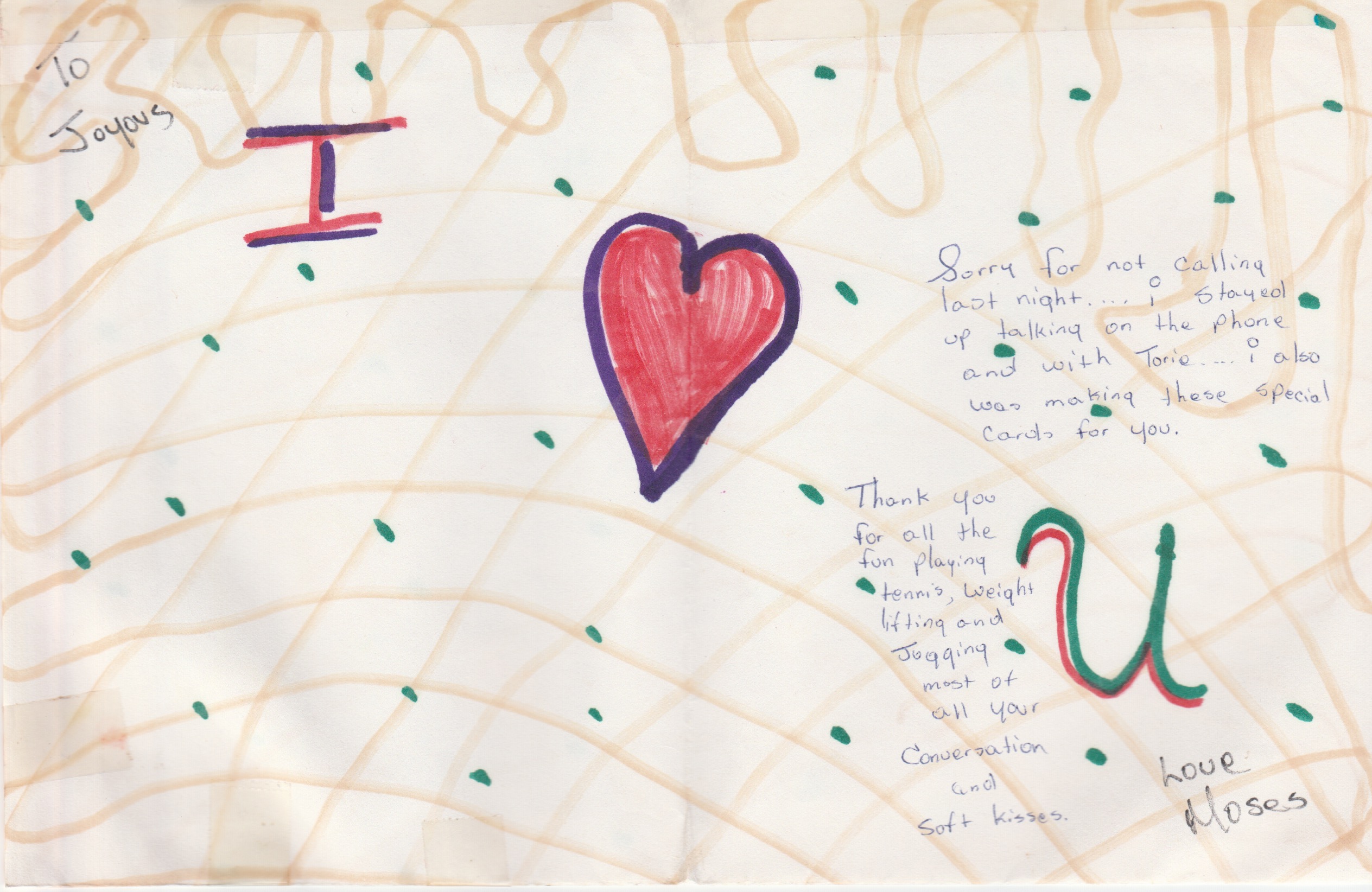
Losing anyone to eternal sleep is hard…but your best friend and first love is really hard. I still have this card, made for me, 35 years ago…man…I miss you.
In Memory of Allenly Ellis Cosmo Whittaker | 1970 – 2022
I found out you had passed from this to the next after the fourth non-response…that has never been like you…not to respond–no text, no call, no picture, no letter…
You were my best friend
Biggest fan
Most critical critic
Hardest fall…from the love train.
You were a son, a brother, a father, a friend to more than a few people.
You were a loner, a solitary spirit, whose private ways were more about pursuing peace than being alone…I get that.
You wanted us to love us…
Your style and your smile, coy and unique, were inseparable.
I am grateful that the
Pain and
Disappointment
Is over.
I love that I still have this card and this photo from 35 years ago…I guess is that this is why we will always need paper…to re-member the parts of us that would be lost in the physical world when our spiritual walk goes full circle…
Can you feel me loving you then as I see me now…looking back…remembering that day?
May there be freedom, equality and brotherhood among all men. May there be morality in the relations among nations. May there be, in our time, at long last, a world at peace in which we, the people, may for once begin to make full use of the great good that is in us.
I grew up wondering who all the people were on the covers of the magazines that were spread on my grandmother’s coffee table.
A symbol of Black pride, they were all so beautiful. They were all so significant.
One in particular comes to mind, forty years beyond my recollections of the visits and 73 years beyond its original publication: Ralph Bunche. No…I don’t remember it on the table but instead on the wall. My grandfather made a wall collage of the covers dating back into the 1950s–overlapping excellence, draped over pegboard in the party space of the basement.
Ralph Bunche was on the cover in 1950 and 1955 (I have come to know)…I don’t remember everyone but I know they were there…lovingly set out for us to see ourselves…to learn of our progress and celebrate our success. Our history and our biography, tied together and photographed, printed on glossy paper and distributed throughout the world.
Ralph Bunche was the first (of only four) Black American Nobel laureates.
Ralph Bunche was one of the first to rally the world to pursue peace in Palestine.
When paired with Roosevelt’s Four Freedoms speech (delivered almost a full decade before), World War and the chronic fight for civil rights, a Black American man became a global mouthpiece. So, I say it loud:
I am Black and I am proud…of Ralph Bunche and all the Freedom Fighters whose work outlines my own journey.
Excerpt from “Four Freedoms” speech of Pres. Roosevelt, January 6, 1941.
Ta-Nahesi Coates is among the generational voices who are willing to once again say it loudly.
Words mean something.
Justice. Peace. Liberty. Freedom.
These words mean everything.
“War is evil.” is what he said in 2023.
“There can be no moral equivalent to something so immoral a procedure as war”, she (Pearl Buck) said in 1949. This is an Americanargument that deserves our full attention.
It is lazy to say that it–war and competition–is inevitable.
Something happened when we were forced to be apart
We longed to be…
To be with
Each
Other
Differently and the same
Peering in
To
Each
Other’s
Lives
To check in
To make sure
That We were alright…
The poems I write are not really poetic in the traditional sense. Rhyme and meter mean less to me than cadence and pulse. My poems are like dances—some short, some a slow drag…all designed to move me, away from harm and into myself, my thoughts and wonderings…my wanderings…my salvation and my strength. My poems save me because they often provide a way for me to talk about history that I am learning or willing to reveal.
I think I have always written this way…errant and pithy, like the flute I used to play.
Notes pushed out rather than strung together, staccato-like and sincere.
This poem is about Black joy unfolding like a dance or a choreopoem or a flower.
The outside
A recent movement
To the seed that still passes its DNA through time
“For a moment I wondered.” (Langston Hughes, 1956, Last line of I wonder as I wander)
I love summer
Because I get a chance to read in a way that in other seasons is more constrained.
I also get to write more freely than I get a chance in other seasons.
I have been working on this thing…for three years now…wandering through so many different playgrounds, forests and literary ecosystems…awe-filled and terrified to tell the stories I hear, see and feel.
Moving from what is “kool” to the kaleidoscopes that are revealed like fruit twisting in the wind on tree mirages
Looking for new things in novel ways with recently revealed tools.
Being careful for the obvious working not to obfuscate the phenomena I see as treasure on a field full of mines
Wondering as I wander
Believing the value over the edge of this learning…
I share because I don’t want to forget. I am an introvert who projects as an extrovert, but people who know me, know better. I am a life-long lover of learning—not school. But schools are the structural place where many people acquiesce and assign the task of learning/teaching…so I think of myself as a pedagogue—a critical one (in multiple ways). I also share in the #31DaysIBPOC space with the hope that other brave and wondering people who lead others as educators see something in my piece that brings them comfort…knowing that what they are experiencing, others experience. Shout out to Angela Bae: I felt every line with a special familiarity that helped me finish this piece even though the cover art for our stories is probably very different.
My writings usually flow between poem and essay, choreographed with rhythms and visuals implied in the background. I prefer to write in quiet places with hints of sunshine lighting the room. This piece is no different. How do I structure my writing? I am a divergent thinker—with no tolerance for game-playing and untruths. I have always been artistic, a little [melo-] dramatic and plain old, regular shmegular. Like Lisa, Angela, Pamela and Renee, I’m from around the way…the girl in the pack of people turning “it” on when I feel like it and speaking for my crew when dictionary language is needed. Some call it code switching but I have come to understand it as “speaking to be heard”—for me and for us—when necessary, however frequent, perhaps too much sometimes but neither silence nor façade is for me.
This piece has a little poetry, a little reflection and a splash of history dropped in a few key places. This is who I am, unapologetically.
Thank you Damaris for sharing #STICKYNOTES yesterday (I have shards of yellow, green, blue and pink everywhere too)! Thank you to all the authors whose writings have come before and will follow this one: you keep me inspired and I love reading your posts every morning.
To Tricia who speaks with a love language like mine—quality time and fond memory making—I appreciate the way you live so openly and share so freely for us online. Meeting you in DC is still one of the coolest things I never imagined I would do. To Kim, oh man…what can I say? From NY to Boston to wherever we get to share space again, the gratitude I have for your work will never fit adequately into words I know, nevertheless I will start by saying thank you…for all you are and do for us.
“To Burghardt and Yolande, The lost and the found…
The Forethought
HEREIN lie buried many things which if read with patience may show the strange meaning of being Black here at the dawning of the Twentieth Century. This meaning is not without interest to you, Gentle Reader; for the problem of the Twentieth Century is the problem of the color-line.”
“The Negroes’ real problem is that they have seldom had adequate choices…they avoidedvictimization…by withholding a significant commitment to any organization or individual.”
Why iS the color line Still our problem? One hundred twenty yearS of Struggle trying to Solve thiS problem. How do we Shift from Saving Souls to Soul Stirring to keep them?Six generationS removed we Still Suffer under the weight of itS limitS, like calculuS…the area under the curve of thiS arc iSSlight yet Significant.
Social.
Sociological.
Societal.
Shameful.
The sound of S as it escapes between clenched teeth…
Hissing
Like a snake, hidden in high grass
Sticky
Subtle
Straightjacketed
Psychological strategies of
Separation & sabotage
Reminding myself that
Success may trigger in-Security and
Self
Service
Is the stance of a sell out
I choose to focus on the S at the beginning and end of solutions…
Using time and history as my guide…
Why this topic on this day?
I watched my mother (and by partnership in her marriage) my stepfather, the man I call Daddy, pressed by glass ceilings and concrete jungle walls…suffer on sticky floors that trapped them like urban mice when poison was too common, obvious and embarrassing to leave out in the open and the mechanics of a trap were too messy. My parents became parents early and the twin spirits of revolution and rebellion were swirling all around them. Their parents were passengers on trains and in cars from Alabama and Florida and Virginia heading UpSouth and MidSouth from Chocolate Cities during the Great Migration. They wouldn’t stand for such defiance and divergence from their conservative moral suasion. Today would have been his 74th birthday. This is a reflection and thank you note to them.
I almost drowned three times: literally and figuratively. Twice when I jumped into deep waters because ‘if they could do it, so could I…right?…not’! Once because I fell over the edge of a boat as I leaned in to see what lived beneath the surface of my clear sight.
I almost drowned literally. After the first time, I thanked God for guards at the Y who knew that most of the kids who show up for ‘learn to swim for free’ (L2S4F) sessions, really don’t know how to swim or hold their breath. When I fell out of that canoe at camp (Nope…I wasn’t supposed to be out there by myself ) I thanked God for L2S4F classes that taught me how to float. I must have been out there for about 15-minutes before they found me…but I was calm and relaxed as the little lake fish tickled my not-so-nervous body. The third time, I jumped willingly into deep and storm troubled waters in a gulf of natural waters. What was I thinking? I really don’t know…the rest of my team was in the water, I wasn’t the same 10 year old little girl, at least I knew how to swim and tread water in a pool…right? L2S4F certificates DO NOT prepare you for the reality and difference between a chlorinated tub and the ocean. The brain of a fear-filled person is not the same as that of an animal whose instincts are simple: trust God in a Matthew 6:26 and Psalm 37:25 kind of way. When you almost drown, the freeze, fight and flee instincts of our human condition overtake all forms of joyful engagement. I respect water now in ways that I did not in my youth. Like Aang learned to respect fire, I have learned to trust waters’ powers to calm and to invoke fear: it is energy and life.
Figuratively, every major job I took I found myself at the edge of deep water. My first Ph.D. program (in chemistry), my first teaching job where racist parents wanted their daughter removed from the Black teacher’s class. I walked into that meeting as if it were a diving board. I didn’t understand the expected performance. I bounced with uncertainty and flopped upon entry into the water. My first supervisory job this year. The eerie similarities between the first and the last time in each case is astounding…somehow I should know better, but something about time and space between them and the learning that happens along the way makes you forget.
What have you learned that qualifies you to facilitate learning?
(After all, learning is supposed to make finding solutions more natural and easy to do…right?) I learned that you will surely have to depend on others to save you when you jump into something because someone else did it first—that is EGO functioning all day! I jumped into danger following others as I compared myself to them. When I fell out of the boat, it was because my curiosity was driving me to explore—my mistake was going by myself. Others were close enough to “find” me and now that I think about it, the water was probably not that deep—I could have made it back to the dock paddling if I tried but instead, I was actually comforted (and proud of myself) that I stayed calm enough to hear my own breath, sensitive enough to feel the pecking of the fish beneath me, and unafraid enough to test myself.
Why these points in history: 1947, 1963 and now?
1947 was championed (like 1863 and 1865 and 1884) as a critical year in the multicultural through line of American history.
1963 was when MLK wrote Why We Can’t Wait. The March on Washington for jobs and freedom happened. The Atlantic captured it beautifully in their 50-year retrospective.
2023 is the year that I will remember as the year I decided to remove the mask I have worn for so many years in public. Thoughts swirl of Maya Angelou who wrote “The Mask”, a variation on Paul Lawrence Dunbar’s 1895 poem. 2023 is an anchor point for all the people who wear and have worn masks in order to survive.
Aspirations keep us reaching upward. But some of us are just stuck.
1947: Integration of major league baseball and the disruption of color lines that never went away. Two years after WWII, the world cheered as Jackie Robinson integrated the major leagues. How many people asked questions about where/how he traveled with the team? Was he safe?
1963: Myth of mobilization “The Germans, Irish, Italians, and Jews, after a period of acclimatization, moved inside political formations and exercised influence. Negroes partly by choice but substantially by exclusion, have operated outside of the political structures, functioning instead essentially as a pressure group with limited effect.” (Why We Can’t Wait, p. 184). Every time I think about ethnic enclaves like Chavez Ravine I wonder what IBPOC unity could mean if we really saw each other and resisted the myth of merit by mobilization.
2023: Truth telling beyond reckoning. The years between 2019 and 2022 will go down in history as a major period of social reckoning in the United States. Sanctioned violence against individuals and collective calls for justice crossed racial, ethnic, class and gender lines at state and interpersonal levels; somehow people have forgotten how NOT to be socially distant (or rather to be socially close without a populist false knowing or perverted intimacy created by invasive social media). The unintended consequence of all the messaging to ‘fend for yourself’ has produced a pathology on the scale of crisis and disaster.
Drowning waters
Danger is everywhere.
Princeton Plan: 50 Years Later
Drowning waters is a metaphor for the environment where we are. All of us are vulnerable to hurt and harm—the dangers of being together. Drowning waters can be contrived like a pool or natural like the ocean but they are always risk-heavy, even for the skilled. Learn from the stories these waters hold. I point out three different media examples of drowning waters.
Using time and history as my guide…
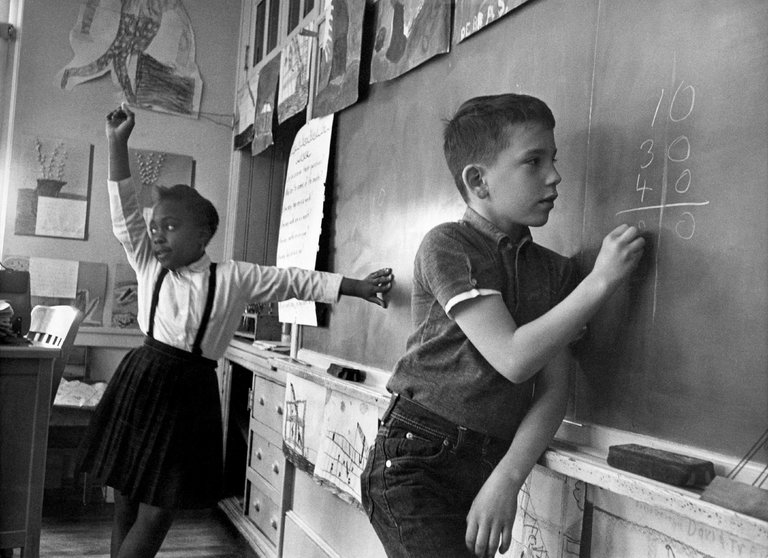
1947: The Princeton Plan is an example of legislated school integration. Combining schools and resources, ethnic White and IBPOC children came together in schools with their White peers. Watch this history and hear the water
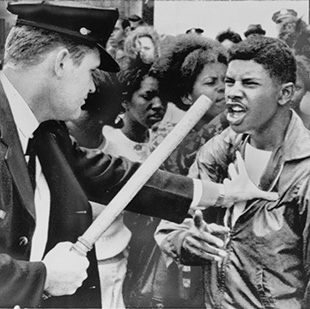
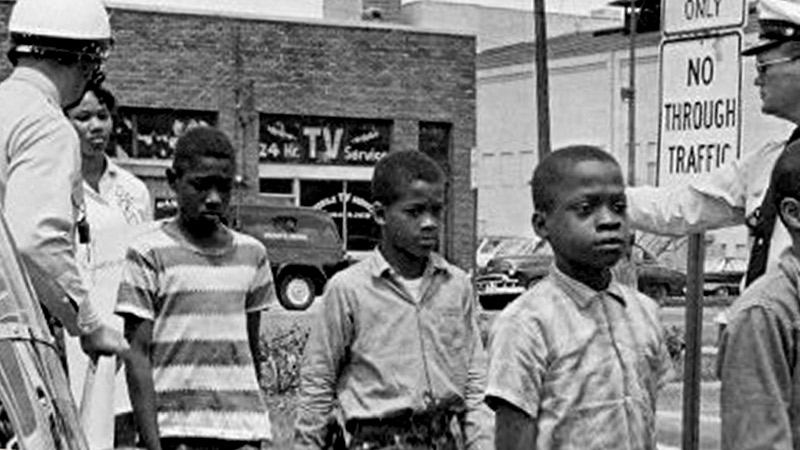
1963: The Children’s March was called D-day back then. Juggling the complexity of compliance (to their parents) and resistance (to the system), youth organized with adult help and supports—from within and outside of their community—to change the course of their experience. How could they have known the evils lurking beyond the obvious horizon but they took a chance on their agency. What do the elders, alive as children back then want us to know?
They woke up with their mind stayed on freedom
They heard adults use coded language that they fully understood. Adjacent in purpose though slightly older in years, they trusted that adults cared about them and wanted to secure for them a future that they did not have.
Revolution in 2023 exists in the long-cast shadow of the past…know these histories. There is much to be learned.
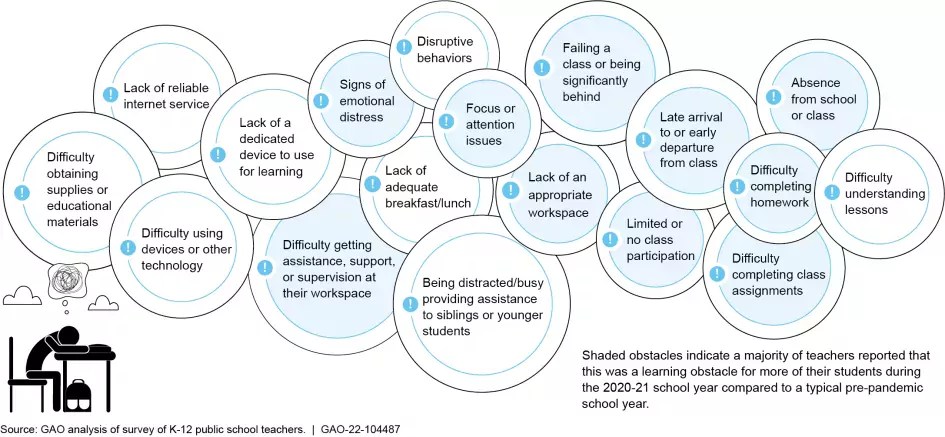
2023: Emerging from quarant-eaching (Teaching in Quarantine film by Lydia Cornett https://vimeo.com/429646624?login=true) do we really want people to “mute themselves” as they enter conversations? How do we preserve the liberties and freedoms we all experienced when we were set at home, socially/structurally distant, from others while acknowledging the comedy and tragedy in those same arrangements? Background noises we can’t control. Gadgets and distractions that allow us to stay interested and families or caregivers that made sure we stayed motivated. In those moments, some of us thrived in solitude while others of us, turned it all off and became like adults (or like children).
Solutions
Every now and then, teachers need to be talked to. James Baldwin paused in 1963 to do it at a conference. We needed that. ‘Yoli’ did it again in 2022. Centering your SELF without being a self-serving sellout is an archaeological process (Sealey-Ruiz, Y. (2022). An archaeology of self for our times: Another talk to teachers. English Journal, 111(5), 21-26.).
Call it my work (or maybe my journey), at the conclusion of this piece, I offer solutions for sticky floors and drowning waters:
Sort through the catalog of your personal interests as an exercise in soul keeping and self-care. This will allow you to walk in your own truth.
Identify your needs for full human joy without comparing yourself (or your needs) to others’. Observe others but don’t compare yourself to them.
Pay attention to your VIVID dreams—the ones you remember, are designed to speak to you. The ones that are scary and the ones that inspire you are pointing you in specific directions to keep you safe, challenge you to stay disciplined or inspire you to be. There is a reason why you remember them, if only to laugh about it later.
Evaluate your “reasons why” without sacrificing any part of yourself or ascribing someone else’s reasons why to your own
Think more about harm reduction and elimination than the trauma that harm produces. Sustainable change requires different thinking. Imagine eliminating harm rather than simply responding to it…
Lead as a member of a collective (know who is with you): find your people, embrace community and share responsibility. The Kwanzaa principles are alive and well. We don’t only need charismatic individual leaders; we need collective agency and efficacy. Live the principles all day, every day.
Step away from stuff and folx…no phone, no computer, no pressure for a few minutes every day, at least three times a day—in the morning, in the evening and somewhere in between, so you can keep your soul. Teaching yourself to retreat is different from learning how to rest. Take baby steps toward the latter by prioritizing the former. Guard your heart, your life and your work by adding distance between you and the stuff around you. This is stewardship.
Don’t be afraid to make a commitment to individuals and organizations whose ceilings, floors and drowning waters you feel. Using time and history as our guide, we have seen that we can make it…now believe it.
This blog post is part of the #31DaysIBPOC Blog Series, a month-long movement to feature the voices of indigenous and teachers of color as writers and scholars. Please CLICK HERE to read yesterday’s blog post by Damaris Guitierrez (and be sure to check out the link at the end of each post to catch up on the rest of the blog series).
…and so will I go in unto the king, which is not according to the law: and if I perish, I perish… (Esther 4:16)
What is it about bad situations that make them usually go from bad to worse and worse to unbearable?
One day after another senseless mass shooting, the semblance of a mob that endorses rudeness is making me feel sick.
Ready to resign,
I wonder where is the thinking that is supposed to parallel the critical in public discourse.
I feel like Esther standing before her judge and in protest. As an educator and colleague of people who are being demonized for promoting change, this school year feels like I have suffered a personal assault.
Change makers have the awesomely terrible task of thinking different. A 5-year ad campaign for Apple, challenged us to see diversity as strength even as it corralled us into accepting a new definition and standard of meritocracy. On the surface, it convinced us of individual genius but deeply embedded in the shallow message of anti-social distance created by an MP3 player and headsets was a unique thread of interdependence and community.
Whether we elicit the school histories of Mamie Tape in 1885 or Sylvia Mendez in 1946 or the immigrant, Black and brown children of Witherspoon-Jackson in 1947, we are all made better when we grow to value difference. Every person and group of people who comes into this community bears witness to greatness…making profound sacrifices to be a part of it in wildly hostile environments and in pursuit of equality, equity, and excellence.
These early battles for Civil Rights are now a fight to simply be civil…to see each other’s humanity and consider that beneath the tip of every iceberg is a mountain or maybe a volcano of other stories that may never be told. We are experiencing divisiveness and shamefully deceptive storytelling that ignores our history, dismisses the need for process and leaves all of us vulnerable to destruction.
How do we heal from years of harm when we remain enamored by political rhetoric, where violence is ignored and self preservation is normalized as common uplift? We teach about fallacies (ahistorical, legalistic, individualistic, fixed and tokenistic) in the classes where I have led and somehow we are in a moment where all five are colliding to form one giant fallacious iceberg. It is the worst kind and the children are watching.
How do we move forward when we allow ourselves to be stuck in an emotional and intellectual space that breeds contempt instead of community? Is this what we have become? The canopy created by tree-lined streets filled with people and organizations that welcome innovation and divergent thinking for the fruitful outcome of sanctuary and protected growth is not here anymore. I miss that and know that I am not alone.
Coming from a place where a little girl who thought she would be a dancer, or an actress, or a poet, not knowing that actors could be activists or that all art is political, became a teacher. Staged in a gallery like a choreopoem and an experiment in four parts in tribute to the legacy of Black art and aesthetics that move and shape–though molded by pain crafts joy like a river or a dance and a song, these thoughts are about a tree, planted in dirt that tells his/story. Classified and constructed, analyzed and named, this talk is about a tree.














 Joy Barnes-Johnson, Ph.D.